Monday, September 11, 2006

Futuresex | Lovesounds

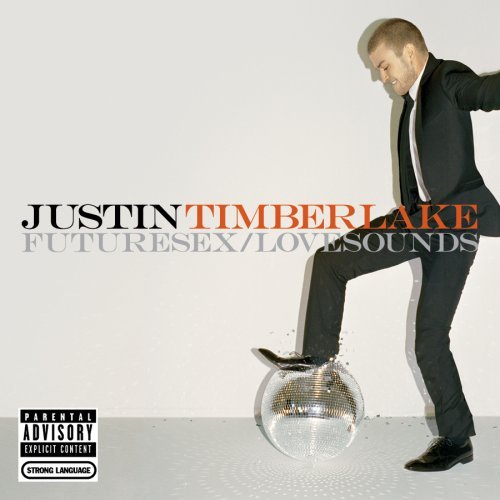
The long awaited second album from Justin Timberlake, titled Futuresex/Lovesounds is simply amazing! I was fortunate enough to get a preview of the entire album. Justin has not only drawn you in with his amazing innovative rhythms but also his bordering of music between pop, rock, R&B and hip-hop.

The first single Sexyback is already topping the charts at number 1 in Australia and America (Billboard charts Pop 100, Top Digital Download etc etc etc all at No.1). Lyrics for this song is limited, but it's the electronic rhythms and sounds that draw you in and dance to the beat or at least turn up the volume to listen to something different and unique.

If there was ever any question about whether sexy was in need of reviving--a doubtful proposition at best, given the sheer volume of JT's gyrating counterparts--he lays it to rest instantly over a small but insistent Timbaland-concocted beat. On that track, Timberlake's appeal is his sweet but newly thuggish-sounding voice--here's a good kid gone bad, and he's determined to convince us of it not only by tossing a few well-timed motherfuckers our way but also with such lyrics as "I'll let you whip me if I misbehave."

The rest of FutureSex will feel familiar to anyone who picked up 2002's brilliantly funk-flecked Justified: "Love Stoned/I Think She Knows Me," shifts from Michael Jackson-esque paranoid trilling to pulsating guitar rock; "Chop Me Up," a collaboration with Three 6 Mafia and Timbaland, gives up the grit rap-style but still manages to recall both Prince and Stevie Wonder; "My Love," with T.I., mines classic Timberlake territory with meltaway lyrics like "I can see us holding hands walking on the beach/Our clothes in the sand"; and the straight-up but groovy lament "Losing My Way" asks, searchingly, what may be the silliest question a squeal-inducing pop star has ever posed: "Can anybody out there feel me?"

There are times when Justin blends in his beat-boxing rhythms, which he does oh-so well, into the music which creates the human touch to all that electronic music and static-music. Although his lyrics are not as fantastic as song writers like Rob Thomas or Richard Marx, his ability to blend and bend the sounds in the music to suit his audiences is enough to pull you in to buy this album. I can forsee that most of his songs will definitely become timeless dance-floor anthems once remixed by all those DJs out there.

Justin Timberlake has definitely up the ante and changed the direction of the music industry by continuously challenging and changing the face of music. This album has moved away from his dirty pop music he created when he was with NSYNC into the electronic realm.

I highly, highly recommend this album to anyone who is willing to keep an open mind to how the direction of music should go in the future - an amalgam of sound.

9 out of 10 stars

Saturday, September 02, 2006

Prison Break

I thought that this TV series was going to be another boring one. Intelligent TV series don't get any better than this. All those stupid reality series were just spreading on TV like a cancer that won't stop. There are only a few good reality series out there, but we're not here to talk about that.

Don't get me wrong, TV series like Lost are good, but somehow when mysteries drag on and on and on through 2 seasons with so many character developments and so many changes, they tend to wear you out. At the same time, watching a TV series with a continous plot week after week just makes you forget what happened in the earlier episodes, especially when something develops in the later episodes. Another example will be the TV series 24 (which I daresay didn't deserve to win the Emmy's this year!) which you have to watch in 24 hours, otherwise, it's just a waste of time trying to figure out what happened in episode 1 or 2 when you've reached episode 23 or 24.

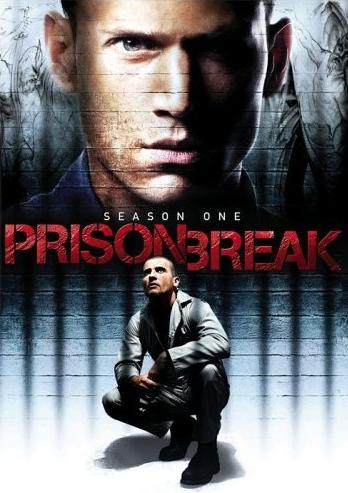
Anyhow, Prison Break is just plain addictive! This series is about how Michael Scofield (Wentworth Miller) cooks up a really elaborate plan to get himself into prison to free his innocent brother, Lincoln Burrows (Dominic Purcell), who is on death-row. The reason why he so confidently enters prison to break his brother out is because he got his hands on the original prison blue-prints and ultimately has the entire blue-prints and escape plan tattooed onto his body.

The cast of characters is unique to any prison environment. And one of my favourite characters is Theodore Bagwell aka T-Bag (played by Robert Knepper), who's a murderer, a sexual predator and a white supremacist. The actor who portrays him goes through many changes and is very skilled at portraying the mannerisms of his character to perfection. I won't spoil the series by revealing too much.

The character developments here are so much more straight-forward than Lost. And with all good TV drama series, like The X-Files, all you have to do is throw in a huge conspiracy with the government and it becomes a classic. My only quarrel with the show is that the character Michael Scofield gets to move about the prison a bit too liberally. Granted that it is possible, but if you watch the series, some of it is rather improbable, but it's entertaining nonetheless to see how they cover up for one another.

I purchased the DVD mainly because I wanted to do a marathon and didn't want to wait for it to be telecast here. It was suppose to have started in April 2006 here, however, they chose to telecast Lost Season 2 first instead and I couldn't wait. Now all my friends and colleagues are just getting their queue number to borrow this set from me. Heck, even my parents want to watch it!

I highly recommend this series to anyone who have previously enjoyed prison breaks along the lines of the movie The Shawshank Redemption. This series will leave you at the edge of your seats and wanting more! Breaking out of prison has never been so innovative, exciting and entertaining altogether!

9 out of 10 stars

Wednesday, August 30, 2006

Battlestar Galactica Complete Season 2

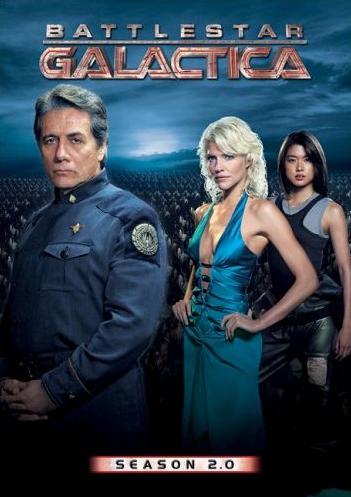
I just received my Battlestar Galactica Complete Season 2 DVD in the mail a few days ago and have been on a marathon to watch the entire series in one sitting! However, I failed to complete the marathon in one sitting, so I had to settle for watching the entire series in a week.

I was aching and dying and couldn't wait for the USA Code 1 version, that was split in 2 parts, titled Season 2.0 and Season 2.5, to be released on 19 September 2006. They were pricing it differently, and in order to appease fans, they decided to break up the release of the DVDs into 2 sets, which at the same time, cost much more!

I got mine set from Australia which is Code 4 and it is the COMPLETE season, no 2.0 or 2.5, just the whole thing, plus it was so much cheaper too!
In this season, the stories are so much more interesting. The psychological warfare is still there, but it's been distributed throughout the entire fleet, not to spoil too much for everyone. I must say that the Cylon's religion of there being only one God is most intriguing. There was a scene in which Number Six tells Dr Baltar that you have to believe in the Cylon God, because there is no after-life, there is only oblivion. And how Dr Baltar's staunch atheism gives way to a fanatical belief not only in the Cylon God, but in his own status as an instrument of God.

Bringing Helo and the Caprica-copy of Sharon back to
Galactica and the impact on the entire fleet as her pregnancy comes to term. This was a really powerful story arc because you get to see how much a mother, not just the Cylon-Sharon, will go to protect her unborn child.
At the same time, the introduction of a few more models of the Human-Cylons at the beginning, middle and end of the season. Also, there are factions within the Colonial fleet that are interested in peace with the Cylons instead of the ongoing chase and war. This is touched upon briefly in the finale 2-parter where they find a planet suitable to colonise as New Caprica, and later the arrival of the Cylons and how they broker an uneasy peace, but at a high price - the enslavement of humanity on New Caprica.

This DVD set also has the episode
Pegasus at it's extended running time of 56 minutes instead of the telecast 42 minutes.
I must say that the entire Season 2 has very human elements. The topics that are touched upon are family, religion, love, sacrifice and politics. These are the topics that most sci-fi series seem to shy away from, or that they only touch on a few of them and not the rest.

This is why
Battlestar Galactica is the top rated sci-fi series at the moment. So, here's hoping that it will last as long as Stargate SG-1 which has the current track record of 10 seasons, after it just got cancelled.


Let's not jinx it!


Click here to watch Battlestar Galactica Season 3 Preview Trailer

(The music playing in the background of the trailer is
Nickelback's Savin' Me)

9.5 out of 10 stars

Sunday, August 27, 2006

Top 10 Ways To Destroy Earth - No.1

Hurled Into The Sun

You will need: Earthmoving equipment

Method: Hurl the Earth into the Sun. Sending Earth on a collision course with the Sun is not as easy as one might think; even though you don't actually have to literally hit the Sun (send the Earth near enough to the Sun (within the Roche limit), and tidal forces will tear it apart), it's surprisingly easy to end up with Earth in a loopy elliptical orbit which merely roasts it for four months in every eight. But careful planning can avoid this.

This is impossible at our current technological level, but will be possible one day, I'm certain. In the meantime, may happen by freak accident if something comes out of nowhere and randomly knocks Earth in precisely the right direction. Earth's final resting place: a small globule of vaporized iron sinking slowly into the heart of the Sun.

Earliest feasible completion date: Via act of God: 25 years' time. Any earlier and we'd have already spotted the asteroid in question. Via human intervention: given the current level of expansion of space technology, 2250 at best.

Source: "Infinity Welcomes Careful Drivers," by Grant Naylor

Feasibility rating: 9/10

Top 10 Ways To Destroy Earth - No.2

Eaten By von Neumann Machines

You will need: a single von Neumann machine

Method: A von Neumann machine is any device that is capable of creating an exact copy of itself given nothing but the necessary raw materials. Create one of these that subsists almost entirely on iron, magnesium, aluminum and silicon, the major elements found in Earth's mantle and core. It doesn't matter how big it is as long as it can reproduce itself exactly in any period of time. Release it into the ground under the Earth's crust and allow it to fend for itself. Watch and wait as it creates a second von Neumann machine, then they create two more, then they create four more. As the population of machines doubles repeatedly, the planet Earth will, terrifyingly soon, be entirely eaten up and turned into a swarm of potentially sextillions of machines. Technically your objective would now be complete - no more Earth - but if you want to be thorough then you can command your VNMs to hurl themselves, along with any remaining trace elements, into the Sun. This hurling would have to be achieved using rocket propulsion of some sort, so be sure to include this in your design.

So crazy it might just work.

Earth's final resting place: the bodies of the VNMs themselves, then a small lump of iron sinking into the Sun.

Earliest feasible completion date: Potentially 2045-2050, or even earlier.

Source: "2010: Odyssey Two," by Arthur C. Clarke

Feasibility rating: 8/10

Top 10 Ways To Destroy Earth - No.3

Pulverized By Impact With Blunt Instrument

You will need: a big heavy rock, something with a bit of a swing to it... perhaps Mars

Method: Essentially, anything can be destroyed if you hit it hard enough. ANYTHING. The concept is simple: find a really, really big asteroid or planet, accelerate it up to some dazzling speed, and smash it into Earth, preferably head-on but whatever you can manage. The result: an absolutely spectacular collision, resulting hopefully in Earth (and, most likely, our "cue ball" too) being pulverized out of existence - smashed into any number of large pieces which if the collision is hard enough should have enough energy to overcome their mutual gravity and drift away forever, never to coagulate back into a planet again.

A brief analysis of the size of the object required can be found here. Falling at the minimal impact velocity of 11 kilometers per second and assuming zero energy loss to heat and other energy forms, the cue ball would have to have roughly 60% of the mass of the Earth. Mars, the next planet out, "weighs" in at about 11% of Earth's mass, while Venus, the next planet in and also the nearest to Earth, has about 81%. Assuming that we would fire our cue ball into Earth at much greater than 11km/s (I'm thinking more like 50km/s), either of these would make great possibilities.

Obviously a smaller rock would do the job, you just need to fire it faster. A 10,000,000,000,000-tonne asteroid at 90% of light speed would do just as well. See the Guide to moving Earth for useful information on maneuvering big hunks of rock across interplanetary distances.

Pretty plausible.

Earth's final resting place: a variety of roughly Moon-sized chunks of rock, scattered haphazardly across the greater Solar System.

Earliest feasible completion date: AD 2500, maybe?

Source: This method suggested by Andy Kirkpatrick

Feasibility rating: 7/10

Saturday, August 26, 2006

Top 10 Ways To Destroy Earth - No.4

Meticulously And Systematically Deconstructed

You will need: a powerful mass driver, or ideally lots of them; ready access to roughly 2*10^32J

Method: Basically, what we're going to do here is dig up the Earth, a big chunk at a time, and boost the whole lot of it into orbit. Yes. All six sextillion tons of it. A mass driver is a sort of oversized electromagnetic railgun, which was once proposed as a way of getting mined materials back from the Moon to Earth - basically, you just load it into the driver and fire it upwards in roughly the right direction. We'd use a particularly powerful model - big enough to hit escape velocity of 11 kilometers per second even after atmospheric considerations - and launch it all into the Sun or randomly into space.

Alternate methods for boosting the material into space include loading the extracted material into space shuttles or taking it up via space elevator. All these methods, however, require a - let me emphasize this - titanic quantity of energy to carry out. Building a Dyson sphere ain't gonna cut it here. (Note: Actually, it would. But if you have the technology to build a Dyson sphere, why are you reading this?) See No. 6 for a possible solution.

If we wanted to and were willing to devote resources to it, we could start this process RIGHT NOW. Indeed, what with all the gunk left in orbit, on the Moon and heading out into space, we already have done.

Earth's final resting place: Many tiny pieces, some dropped into the Sun, the remainder scattered across the rest of the Solar System.

Earliest feasible completion date: Ah. Yes. At a billion tons of mass driven out of the Earth's gravity well per second: 189,000,000 years.

Source: this method arose when Joe Baldwin and I knocked our heads together by accident.

Feasibility rating: 6/10

Top 10 Ways To Destroy Earth - No.5

Sucked Into A Giant Black Hole

You will need: a black hole, extremely powerful rocket engines, and, optionally, a large rocky planetary body. The nearest black hole to our planet is 1600 light years from Earth in the direction of Sagittarius, orbiting V4641.

Method: after locating your black hole, you need get it and the Earth together. This is likely to be the most time-consuming part of this plan. There are two methods, moving Earth or moving the black hole, though for best results you'd most likely move both at once.

Very difficult, but definitely possible.

Earth's final resting place: part of the mass of the black hole.

Earliest feasible completion date: I do not expect the necessary technology to be available until AD 3000, and add at least 800 years for travel time. (That's in an external observer's frame of reference and assuming you move both the Earth and the black hole at the same time.)

Sources: "The Hitch Hiker's Guide To The Galaxy," by Douglas Adams; SPACE.com

Feasibility rating: 6/10